You could hear them before you could see them. Deep in the stands, a sea of red shirts dropped as one, gripped invisible oars, and began to row — backs heaving, arms pulling in unison, a whole end of the stadium pretending to drive a longship across the terraces. It was loud, it was ridiculous, and it was perfect. Norway’s supporters had turned a football crowd into a Viking crew, and the boat was pointed straight at France.
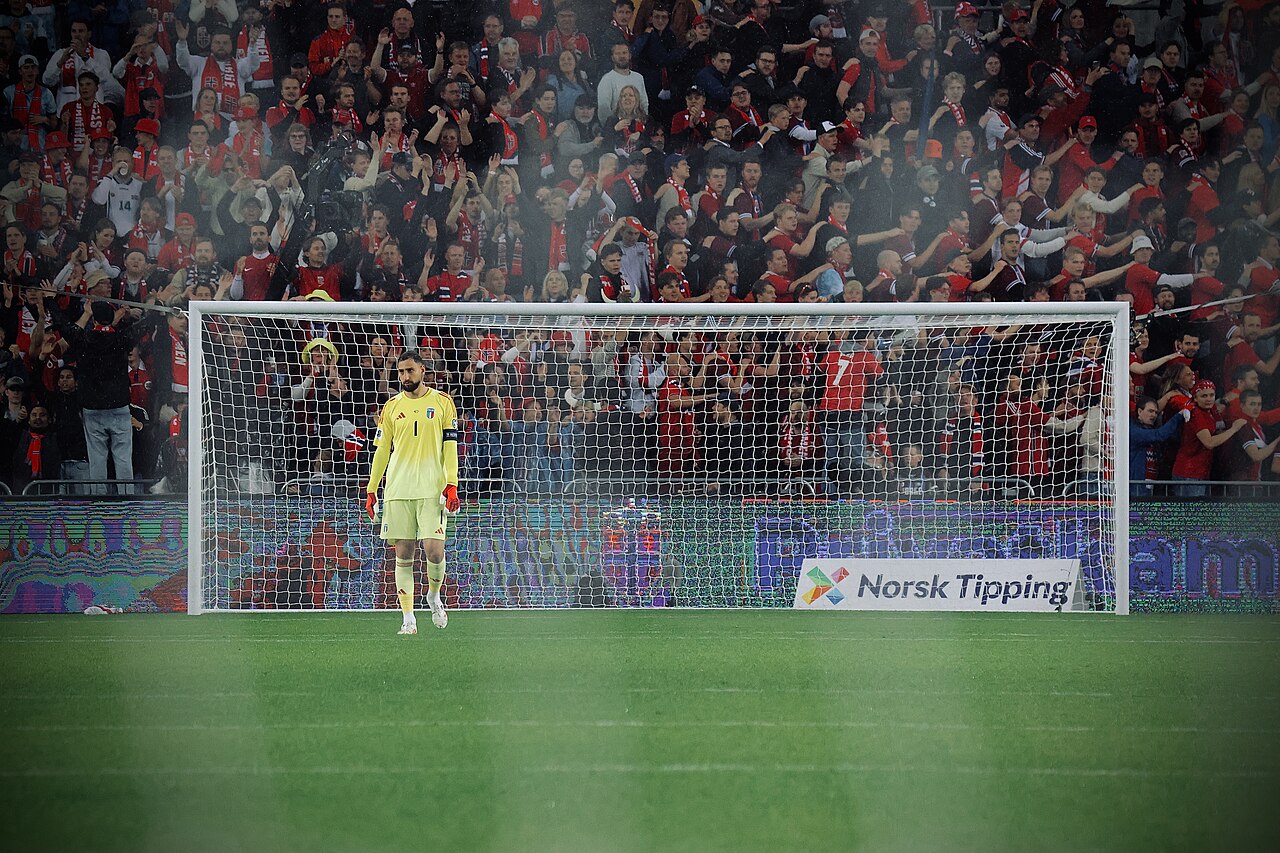
Norway’s travelling support. Photo: MichaelEmilio, CC BY 4.0, via Wikimedia Commons.
The rowing bit isn’t random. It’s a wink at the longship — the shallow, oar-driven warboat that carried Norse raiders out of the fjords and, for three centuries, rewrote the map of Europe. When Norwegian fans row, they’re not just making noise; they’re cosplaying their ancestors.
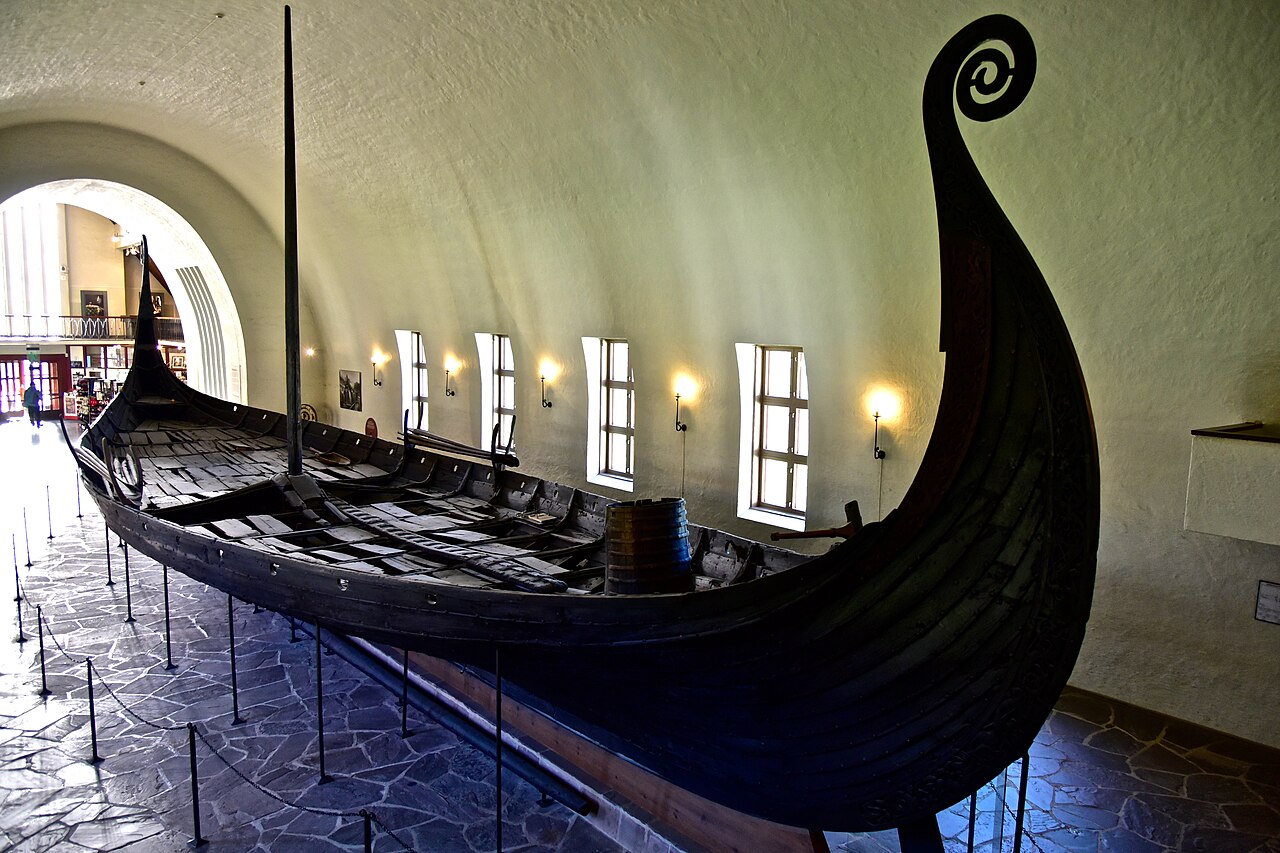
The Oseberg ship, Oslo — the real thing the terraces are imitating. Photo: Larry Lamsa, CC BY 2.0, via Wikimedia Commons.
First they took a piece of France
Here’s the twist that makes today’s fixture delicious. Before the Norse ever truly conquered England, they conquered a chunk of France.
In 911, after years of raiding up the Seine, the Frankish king Charles the Simple cut a deal with a Viking warlord the sagas call Gange-Rolf — better known to history as Rollo. The terms: stop sacking my kingdom, and this land along the Channel coast is yours. That land became Normandy — literally Northmannia, “the land of the Northmen.” Norway proudly claims Rollo as one of its own; his statue stands today in Ålesund, gazing west.
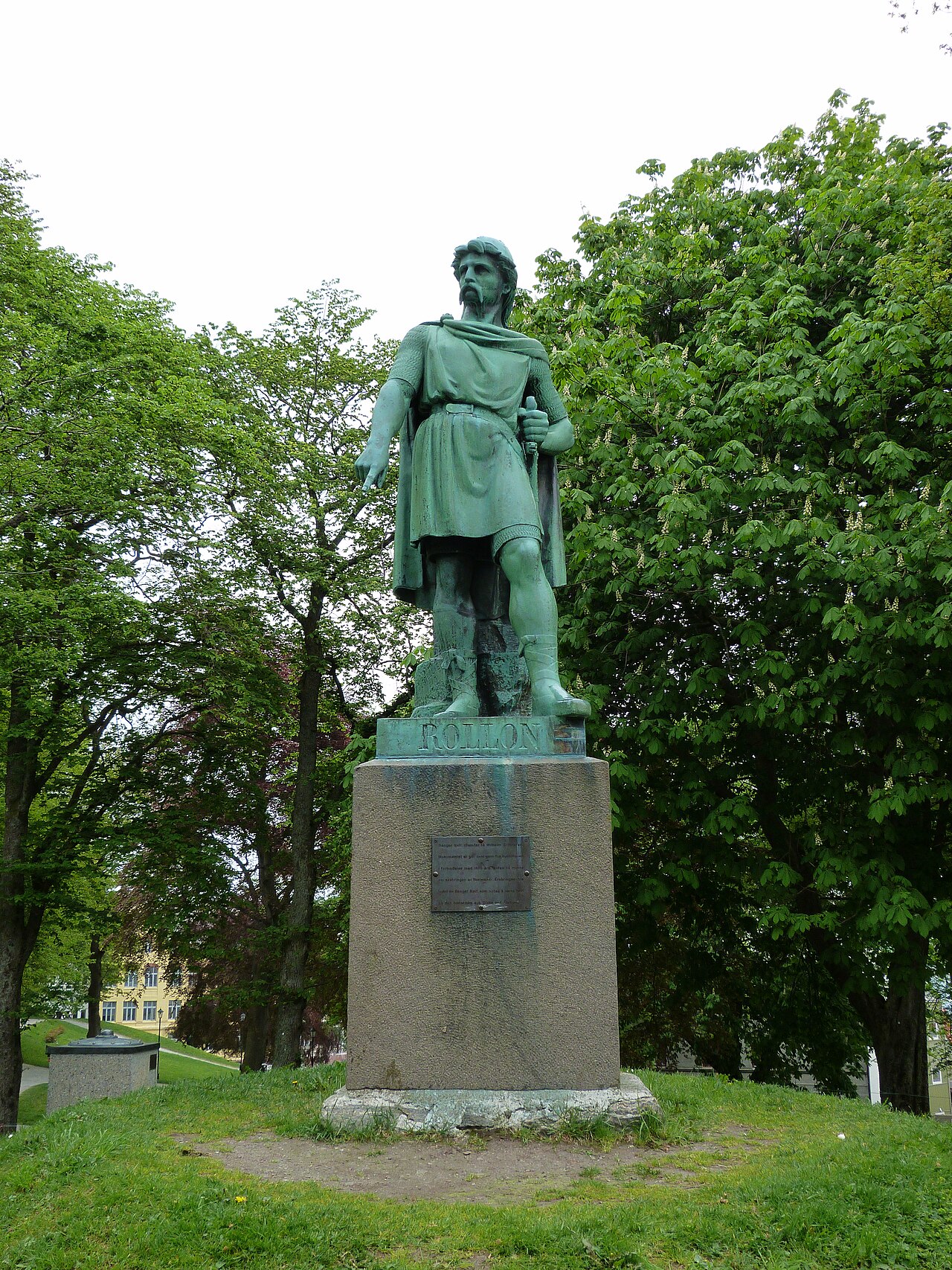
Rollo, founder of Normandy, immortalised in Ålesund, Norway. Photo: Delusion23, CC BY-SA 4.0, via Wikimedia Commons.
Then they took England — twice over, in a single year
Rollo’s descendants traded their longships for cavalry and their Norse for French, but the blood stayed the same. Six generations later, one of them — William, Duke of Normandy — looked across the Channel and decided England should be his too. In 1066 he won it at Hastings, and the Bayeux Tapestry has been bragging about it ever since.
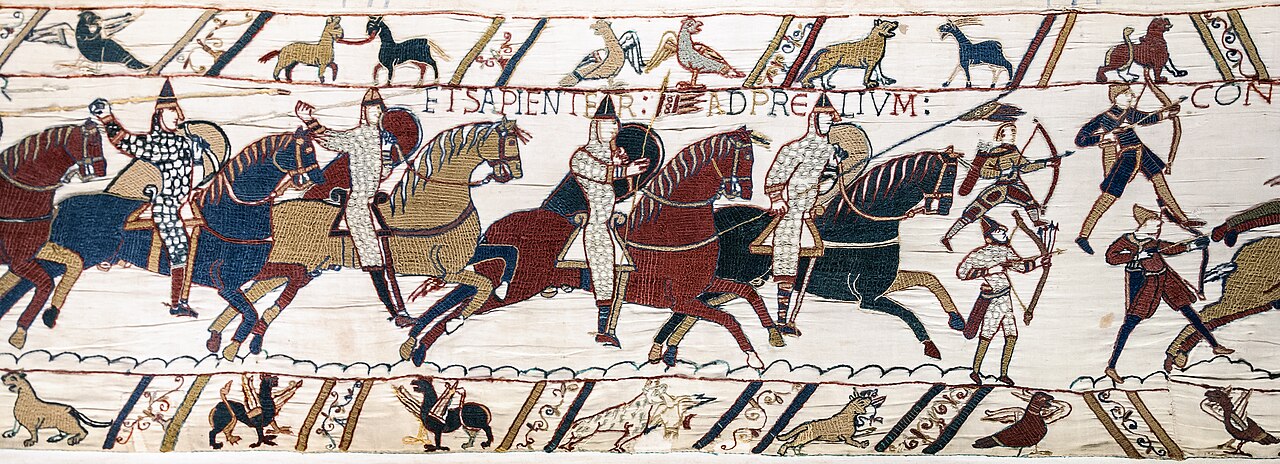
Norman knights and archers at Hastings, 1066 — Vikings’ descendants taking England. Bayeux Tapestry; photo: Myrabella, Public domain, via Wikimedia Commons.
And 1066 had a second act with Norway’s name on it directly. Just weeks before Hastings, the towering Norwegian king Harald Hardrada — “the Hard Ruler,” the most feared warrior of his age — sailed a fleet up to Yorkshire to seize the English throne for himself. He got within a heartbeat of it before falling at Stamford Bridge. He lost; but for a few September days, a king of Norway came to take England outright.
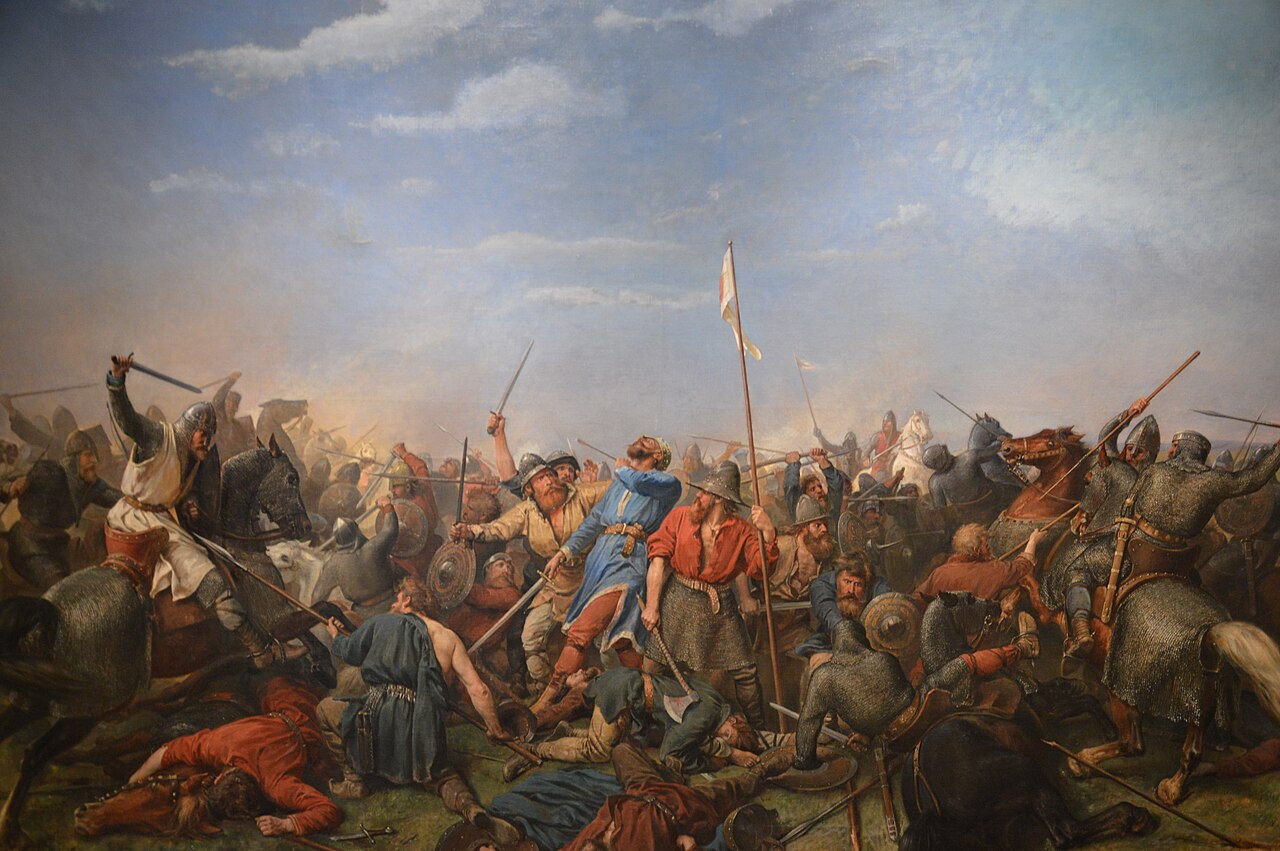
“Battle of Stamford Bridge” (1870) by Norwegian painter Peter Nicolai Arbo — Harald Hardrada’s last charge. Public domain, via Wikimedia Commons.
So the scoreboard of history reads: France, carved into a Viking dukedom. England, conquered by that dukedom’s sons. Two of the great powers of medieval Europe, both wearing fingerprints from the fjords.
Tonight, the rematch is on grass
Which brings us back to the rowing. A thousand years after Rollo bent a French king to terms, Norway lines up against France again — this time for ninety minutes, not for a province. No axes, no longships, just a striker who already plays like a one-man raiding party and a travelling support determined to row their team to shore.
The Vikings took Normandy by sea and England by sword. Norway will settle for three points. Heave.
Norway  vs France
  — today. Will the longship reach the far bank, or will Les Bleus hold the coast? Row us your score in the comments.
A note for the history nerds (we love you): “Viking” Scandinavia wasn’t yet the tidy nation-states of today, and Rollo’s exact birthplace — Norwegian or Danish — is still argued over the mead-horn. Hardrada, famously, lost. But the through-line is real: Norse settlers founded Normandy, and Normandy conquered England. Skål.
Images via Wikimedia Commons (Public domain / CC BY / CC BY-SA, credited above).